

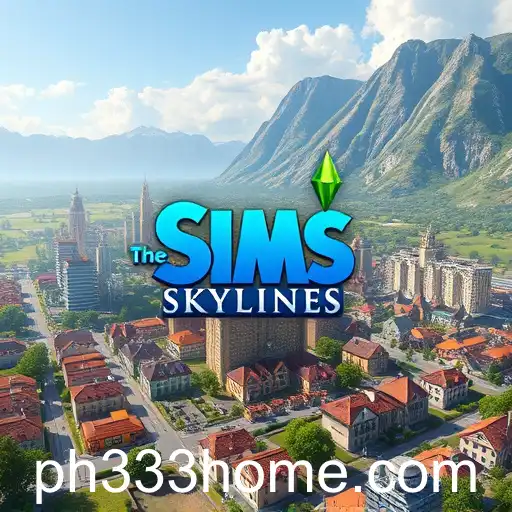

Simulation games have rapidly become a cornerstone genre in the world of gaming, offering players a wide array of experiences that mimic real-world or fantastical activities. This genre is known for its diversity, allowing players to engage in complex decision-making, strategic planning, and often relaxation, as they immerse themselves in scenarios that range from the hyper-realistic to the whimsically surreal. One of the reasons for the popularity of simulation games is their ability to cater to a broad audience by providing both challenging experiences and more laid-back gameplay.
Many simulation games aim to replicate real-world processes, such as city-building, farming, or vehicle operation. Titles like "Cities: Skylines" give players the chance to act as city planners, executing careful planning and management to create and maintain a bustling metropolis. Meanwhile, games like "Farming Simulator" allow players to dive into the agricultural world, managing crops, livestock, and machinery to build a prosperous farm.
On the other end of the spectrum, simulation games can also offer more fantastical escapades. Games such as "The Sims" permit players to manage the lives of virtual characters, overseeing their everyday actions and choices in a sandbox environment that combines open-ended creativity with structured goals. Similarly, games like "Planet Zoo" bring the delight of running a zoo to players' fingertips, allowing them to care for animals, manage staff, and design beautiful habitats.
Simulation games also extend into more niche areas, such as space exploration with titles like "Kerbal Space Program" or hardware simulations like "PC Building Simulator." These games not only entertain but also educate, offering insights into complex topics in a digestible and engaging format. Players find satisfaction in experimenting, learning new skills, and watching their efforts come to fruition.
The adaptability of simulation games means that they can appeal to players who enjoy high levels of realism and detail, as well as those who prefer whimsical and creative interactions. Furthermore, the emergence of VR technology has pushed the boundaries even further, providing players with immersive 360-degree experiences that enhance the simulation's realism. As technology continues to advance, the potential for simulation games to offer increasingly sophisticated and varied experiences only grows.
Ultimately, the allure of simulation games lies in their unique capacity to transport players into any setting imaginable, offering freedom and exploration in a virtual sandbox. Whether managing a theme park, constructing elaborate cities, or simulating life in different cultures, simulation games empower players to create narratives of their own making. With unmatched versatility, the simulation genre continues to captivate and inspire players, providing a virtual playground where the boundaries are virtually nonexistent.
Exploring the latest trends and events in the online gaming industry as of 2026, focusing on key developments and the emerging role of platforms like ph333.

Exploring the evolution and dynamics of Ph333, a leading English game website, as it adapts to current trends in gaming technology and virtual worlds.

Exploring the latest trends and current events in the online gaming world as platforms evolve in the digital age.

Explore how Ph333 is transforming the online gaming industry in 2026 with innovative technologies and immersive experiences.

Explore the latest trends and dynamics shaping the online gaming industry, including insights from PH333 and current technological advancements.

An analysis of 'ph333' and its influence on the gaming industry, focusing on current trends and future predictions.
